

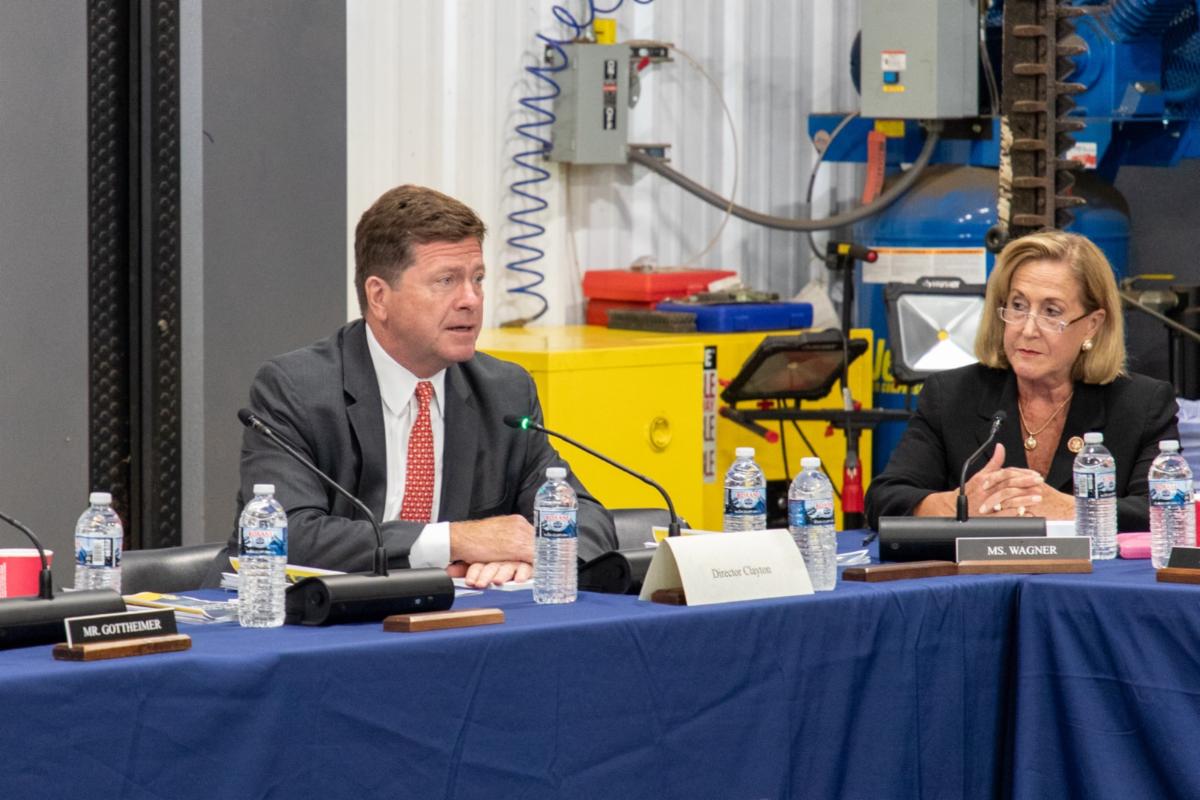
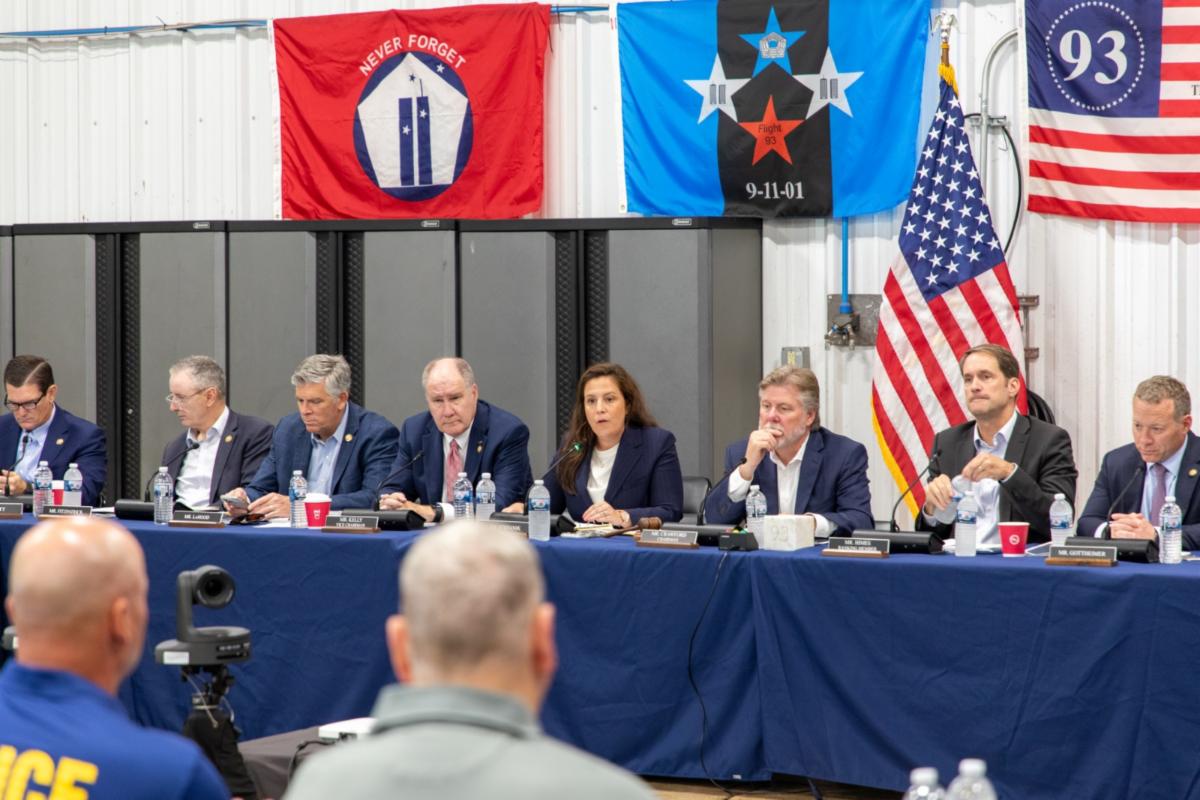
| SHANKSVILLE, PA— This week, the members of the House Permanent Select Committee on Intelligence were joined by Director of National Intelligence Jay Clayton for a roundtable discussion with the families of the heroes of Flight 93 and first responders at the Flight 93 National Memorial, ahead of the 25th anniversary of September 11th this month. Watch the full roundtable here. |
 |
 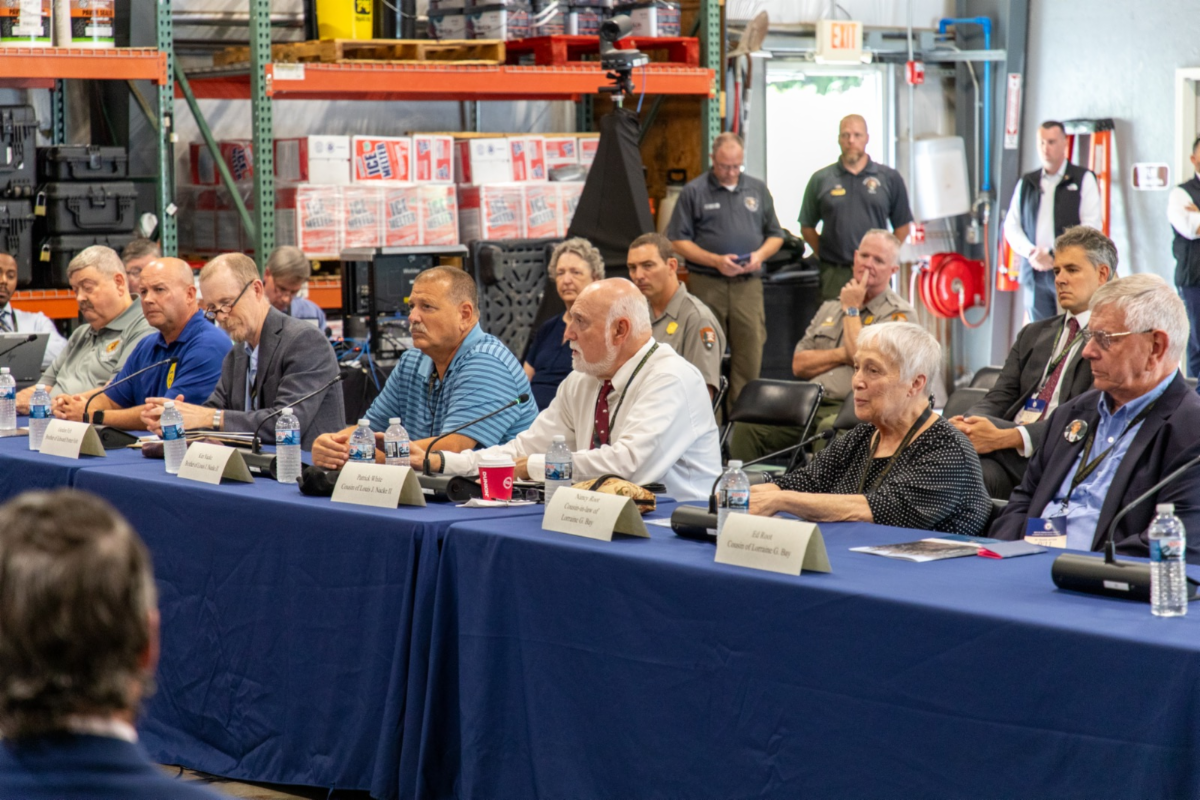 |
| Chairman Rick Crawford: “We recognize that the story of Flight 93 is part of a significant chapter in our nation’s history, but it’s also deeply personal to you all. The purpose of today’s conversation is to hear your experiences, your loved ones’ stories, honor the service of the first responders that day, and educate future generations of Americans of what happened that fateful day.” Vice Chairman Trent Kelly: “There’s a fight or flight response. It’s not always the same for each individual, but we know on that day it was fight. And I’m so honored just to be on the hallowed ground where those wonderful American heroes…There were good guys and bad guys on that plane, and we never ever need to stop calling the bad guys bad guys. We need to get accountability, in whatever form, of anybody who had anything to do with this.” Director Jay Clayton: “The Office of the Director of National Intelligence was born out of the failures of 9/11. We didn’t get it right. We had silos. We had gaps. And we hadn’t kept up with the times. I commend this Committee for continuing to remind us of that and [for] opportunities like this to hear from you to educate us and educate the women and men of the intelligence community who care deeply about their mission. And then the last group I want to recognize is, of course, the heroes and the families. Their stories being fresh in the minds of the people who work in the intelligence community and are what motivates those people every day. So I thank you for continuing to share their memory with us because it does motivate us to do our job as best we can.” Gordon Felt, brother of Flight 93 Hero Edward Felt: “But if we forget, if we neglect, if we only think about it once a year, our loved ones will fade away. And we can’t let that happen. We’ve got to reach back. We lived through the horror of September 11th and became a new people on September 12th, and we’ve got to reach back to September 12th to be better, to honor our loved ones as we go.” Ken Naki, brother of Flight 93 Hero Lewis J. Naki: “I started out wanting to keep my brother’s memory alive, but after hearing the stories of the 39 other passengers and crew members, they all became one to me…I’d give my right arm, and I’m right-handed, to get my brother back. But also, I believe we are a safer place now because those 40 individuals banded as one, became united, and prevented a greater tragedy.” Ed Root, cousin of Flight 93 Hero Lorraine G. Bay: “Those forty had knowledge, not a lot, but enough. They had time, not a lot, but enough. They used that knowledge and they used that time to act. Certainly, I believed they wanted to live, to save their own lives, but I think they realized, they knew, that if they didn’t act, that a far greater tragedy would occur, and they took that time, they took that knowledge and they acted and that’s why we’re here today. We’ve learned that the people who embrace the terrorist philosophy will die for their cause. Their cause is death. They save nothing. They create nothing. They build nothing. The folks on Flight 93 – their cause was life. Certainly to save their own, but they knew as I said a greater tragedy if they did not act, so for free societies everywhere, this memorial means so much.” 9/11 Review Co-Chair Stefanik: “Thank you most of all to the family members who share the stories of their loved ones and our fellow Americans, and continue to tell those stories to the next generation of Americans. Please know that we will never forget their sacrifice and the immense courage these heroes displayed in the face of great evil. It’s been an honor to work on this report.” Representative Darin LaHood: “Just a couple observations being here today, listening to those voices on those phone calls—the level of panic and urgency and stress was really, really impactful and puts things into perspective. And then secondarily, to see the flight path and how beautifully the memorial is designed, but to see that flight path and what happened on that morning and to know that those 40 heroes and what they were able to do to stop the destruction of the U.S. Capitol. And when we think about 9/11 really, the hijackers succeeded with the two towers in New York, they succeeded with the Pentagon, but they didn’t succeed with the U.S. Capitol. And it’s because of those 40 heroes as the reason why that didn’t happen.” Representative Brian Fitzpatrick: “I cannot think of a better example for any of our kids across this country than to bring them here and to hear from you all and to learn the names of your loved ones, the stories of your loved ones, their history, their jobs, where they went to school, what they enjoyed as kids leading up to their act of heroism on that day that saved the symbol of our government, of our country. And it’s just it’s just very, very overwhelming for us and we can’t imagine the emotions it must conjure up for each one of you every single time you come here.” Representative Austin Scott: “I want to thank you for being here and Miss Nancy, I mean, I wrote down what you said. ‘Good people won that day.’ Good people won that day. So thank you for the courage of your family members.” Representative French Hill: “We’re grateful for your family memory and know that it won’t be forgotten. And I think everybody on this committee is committed to do the work that we need to make sure also that not only is the memory not forgotten through education, through sharing, through the suggestions of my colleagues, but that we work with Director Clayton and the entire American homeland defense to make sure something like this does not happen again and to be the best prepared that we can in the seconds world that we live in. And that’s why we’re here today to reflect on what we’ve learned, what we’ve seen, and how we can prevent another group of families on another day in years ahead confronting the same trauma and loss and sense that you feel.” Representative Dan Crenshaw: “Your input on what we’ve seen today has obviously resulted in something that’s very special for the American people and I echo my colleagues’ sentiments. I wish more students would come here. It was said earlier that there’s an ‘us and them’ problem, and I thought that was a really interesting and great way to put it. And it hits home because you know my generation was really formed by 9/11 and the Global War on Terror, and it does feel like an “us and them” scenario, whether you served because of 9/11 or whether you were affected by 9/11. Education is the only way to solve that and you all are doing your part.” Representative Scott Perry: “We are honored to be here. It’s heavy. Standing out on the field reminds me of the rage and the sadness and the helplessness as events were unfolding… And I don’t want to stand in another field on another memorial.” Representative Ronny Jackson: “ I spent 25 years in the military on active duty and…the generation I served with knew nothing but the Global War on Terror. That’s pretty much all that we were involved in those 25 years. But what struck me today…was all that time we fought [for] decades…during this Global War on Terror, but the very first battle in the Global War on Terror was fought here and I think that that’s an important thing to remember. The heroes on that flight were the first to fight back against the plague that has plagued us for so long.” Representative Ann Wagner: “I am so profoundly moved at the thought that someone brought up that there’s been 100 million Americans born after 9/11 and only 15 states teach about it. That has to change. That’s an atrocity.” Representative Ben Cline: “To Nancy for her grandson saying, ‘the good guys won.” They did that day. But we talk about it in the past tense. It’s not the past tense. It’s the present tense. It’s a battle that’s going on in the present tense. And we have to recognize that it is not yet won. We have more to do.” Representative Claudia Tenney: “It’s just incredible that only 15 states in our country recognize [the 9/11 attacks in classrooms]. And I’m really gratified that New York is one of them that has our children learn this…If we could just get all of our children and everyone to understand this is, as Dr. Jackson said, this is where the Global War on Terror started. Let’s hope that we can end that.” Representative Pat Fallon: “Listening to those three recordings, they were under no illusion as to their fates. They knew. And it’s heart-wrenching. And it’s not just members of the Intel Committee that should listen to those recordings. And not just every member of Congress, every citizen in these United States. 15 states require education on these events. It needs to be all 50 states. It must be. 40% of the population has no living memory of 9/11.” ### |